Chiang Mai has three seasons: cool and dry from November to February, hot from March to May, and rainy from May to October. The short answer to “when should I go?” is November to February, when days are warm, nights are cool and the sky is usually clear. That’s also when the city is busiest.
The other months have their own reasons to visit. The rainy season is green and quieter, and the hot season is water-park weather. The one stretch to plan carefully is burning season, usually February to April, when smoke haze can settle over the north.
Below you’ll find the seasons at a glance, a month-by-month guide, what to know about the haze, the main festivals, and which of our places suit which months. Temperatures and rainfall are 1991–2020 averages for Chiang Mai from the World Meteorological Organization. Real days vary, so check the forecast before you go.
Chiang Mai’s seasons at a glance
| Season | Months | Weather in the city | Good for |
|---|---|---|---|
| Cool and dry | November to February | Highs around 29–33 °C, nights 16–20 °C, very little rain | Mountain views, temples, festivals, long days outdoors |
| Hot | March to May | Highs around 35–37 °C; smoke haze in March and April | Water parks, swimming, early mornings |
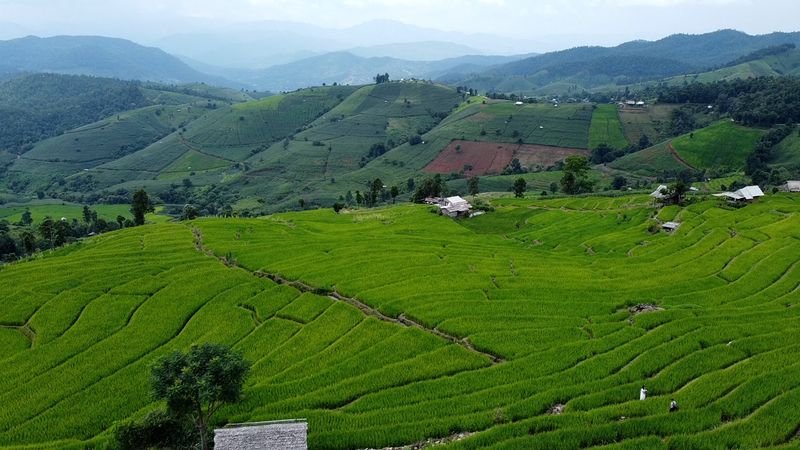
| Rainy (green season) | May to October | Highs around 32–35 °C, frequent afternoon storms | Waterfalls, green rice terraces, fewer crowds |
The mountains are always cooler than the city. On Doi Inthanon and Doi Suthep, take a warm layer for mornings from November to February.
Chiang Mai month by month
January
Average high 30 °C, low 16 °C, about 11 mm of rain. The coolest nights of the year, with clear, dry days. On Doi Inthanon, frost is possible in December and January, and the rhododendrons flower from January to March.
- What’s on: the Bo Sang Umbrella Festival, usually on the third weekend of January.
- Good for: Doi Inthanon, the view from Doi Suthep, cool evenings at the Night Safari.
- Watch out for: New Year crowds in the first days of the month, and traffic jams deep into Doi Inthanon on holidays.
February
Average high 33 °C, low 17 °C, about 10 mm of rain. Still dry and pleasant, but warmer by the day.
- What’s on: the Chiang Mai Flower Festival, usually early to mid-February. In 2026 it ran from 13 to 15 February.
- Good for: outdoor days while the air is still clear, and the rhododendrons on Doi Inthanon.
- Watch out for: haze can start building during the month. From mid-February, check the air quality before an outdoor day.
March
Average high 35 °C, low 20 °C, about 20 mm of rain. Hot, dry and, in most years, one of the two smokiest months.
- Good for: water parks, early starts, and a swim at Huay Tung Tao.
- Watch out for: smoke haze often hides the mountains, and the view from Doi Suthep can disappear. On some days, a higher mountain such as Doi Inthanon is clear above the haze. See Burning season and haze.
April
The hottest month: average high 37 °C, low 23 °C, about 54 mm of rain.
- What’s on: Songkran, the Thai New Year, from 13 to 15 April. Expect water fights around the Old City moat for several days, and traffic and road closures in town.
- Good for: water parks and anything with water.
- Watch out for: the heat, and haze that can last until the rains arrive. During Songkran, keep phones and passports in waterproof bags.
May
Average high 35 °C, low 24 °C, and the rain arrives: about 168 mm over the month. The first storms usually clear the smoke.
- What’s on: on the night before Visakha Bucha, in May or early June depending on the lunar calendar, tens of thousands of people walk up the road to Doi Suthep.
- Good for: water parks while it’s still hot, and the first green of the season.
- Watch out for: afternoon storms. Plan outdoor things for the morning.
June
Average high 33 °C, low 25 °C, about 118 mm of rain. Green season is properly under way, with fewer visitors.
- Good for: waterfalls, the green rice terraces around Doi Inthanon, and the Mae Sa Elephant Camp valley.
- Watch out for: Doi Inthanon’s summit is often in cloud from May to October, and the Kew Mae Pan trail is closed until 1 November.
July
Average high 32 °C, low 24 °C, about 149 mm of rain. Rain most days, usually as afternoon or evening showers rather than all day.
- Good for: forests and waterfalls at their greenest, and quieter temples.
- Watch out for: slippery stairs at Doi Suthep, and evening rain at the Night Safari. Pack a rain jacket.
August
The wettest month: average high 32 °C, low 24 °C, about 223 mm of rain over around 17 rainy days.
- Good for: waterfalls, indoor sights, and short trips that work around the weather.
- Watch out for: thunderstorms can pause outdoor activities. Zipline parks stop in lightning and strong wind, and paramotor flights are cancelled more often.
September
Average high 32 °C, low 24 °C, about 207 mm of rain, almost as wet as August.
- Good for: the same green-season trips as August, and few crowds.
- Watch out for: heavy rain can close waterfalls and make mountain roads slow. Keep a spare day in your plans.
October
Average high 32 °C, low 23 °C, about 124 mm of rain, easing towards the end of the month.
- What’s on: Lamphun’s Hundred Thousand Lanterns festival starts in October. In 2026 it runs from 1 October to 30 November.
- Good for: the last of the green season, with the cooler, drier weather on its way.
- Watch out for: a few late storms.
November
Average high 31 °C, low 20 °C, about 41 mm of rain. The cool season begins and the high season with it.
- What’s on: Yi Peng and Loy Krathong, on the full moon of the twelfth Thai lunar month. In 2026, the full moon falls on 24 November. The Lamphun lantern festival runs until 30 November.
- Good for: almost everything. Doi Inthanon’s Kew Mae Pan trail reopens on 1 November, and paramotor operators recommend November to January for flying.
- Watch out for: busy roads and full hotels around the Yi Peng nights.
December
Average high 29 °C, low 17 °C, about 14 mm of rain. The coolest days of the year.
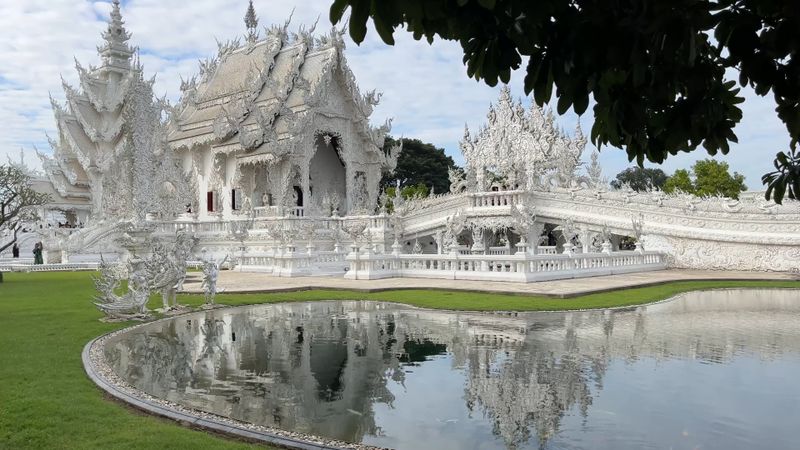
- Good for: mountain viewpoints, sunrise on Doi Inthanon (frost is possible), and long days out such as the White Temple in Chiang Rai.
- Watch out for: the busiest weeks of the year around Christmas and New Year. Book ahead and start early.
Burning season and haze
From about February to April, smoke from farm burning and forest fires collects over northern Thailand. It happens in the dry season, when there’s no rain to wash the air clean. The worst weeks usually fall in March and early April, and the first heavy rains in May usually clear it.
How bad it gets changes from year to year. In 2026, Chiang Mai banned open burning from 1 January to 31 May, yet the city still saw dangerous PM2.5 levels in late March and early April.
How to check. Look at the PM2.5 reading on the morning you go. Use the Air4Thai app or website, from Thailand’s Pollution Control Department, or IQAir. A reading that’s fine in town at 8 am can still look hazy from a viewpoint.
How to plan around it.
- Keep your outdoor days flexible, and move them to clearer mornings.
- Higher mountains are sometimes above the haze when the valley is under it.
- Plan indoor options for bad-air days: museums, cafés, markets and spas.
- A well-fitted N95 or KN95 mask helps outdoors.
- If you have asthma, a heart or lung condition, or are travelling with babies, consider the cool season instead, and ask your doctor before travelling in March or April.
Festival calendar
Dates for most festivals move every year with the lunar calendar or the organisers’ plans, so check the current year’s dates before you book.
| Festival | When | Where |
|---|---|---|
| Bo Sang Umbrella Festival | Usually the third weekend of January | Bo Sang village, San Kamphaeng, east of the city |
| Chiang Mai Flower Festival | Early to mid-February (13–15 February in 2026) | Suan Buak Haad park and the Old City |
| Songkran (Thai New Year) | 13–15 April | Across the city, especially the Old City moat |
| Visakha Bucha walk up Doi Suthep | The night before Visakha Bucha, May or early June | The road up Doi Suthep |
| Lamphun lantern festival | October to November (1 October to 30 November in 2026) | Wat Phra That Hariphunchai, Lamphun |
| Yi Peng and Loy Krathong | Full moon of the twelfth lunar month, in November (24 November in 2026) | Tha Phae Gate, the Ping River and temples across the city |
Which places suit which months
| Place | Best months | Keep in mind |
|---|---|---|
| Doi Suthep | November to February, for a clear view | Haze in March and April can hide the city |
| White Temple | November to February | Hot and hazy in March and April |
| Doi Inthanon | November to February | Summit often in cloud from May to October; Kew Mae Pan opens from 1 November |
| Huay Tung Tao | November to February; March and April for a swim | Haze can hide the hills in March and April |
| Night Safari | All year; November to February for cool evenings | Evening rain from May to October |
| Mae Sa Elephant Camp | November to February, in the morning | Muddy paths in the rainy season |
| Ziplines | November to February | Storms can pause the lines |
| Paramotor flights | November to January | Wind and rain cancel more flights from May to October |
| Water parks | March to May | The quarry lake feels cold in the cool season |
| Lamphun lantern festival | October and November | Ends on 30 November in 2026 |
| Yi Peng and Loy Krathong | November | Very busy around the full moon |
FAQ
What is the best month to visit Chiang Mai? For weather, November to February. December and January are the coolest. November adds Yi Peng and Loy Krathong, and the start of the cool season.
When is burning season in Chiang Mai? Usually from February to April, with the worst haze in March and early April. The rains in May usually clear it. Check the PM2.5 reading on Air4Thai or IQAir before outdoor days.
Is the rainy season a bad time to visit? Not necessarily. From May to October the countryside is green, waterfalls are full and there are fewer visitors. Rain usually comes as afternoon or evening storms, so plan outdoor things for the morning.
When is it coldest in Chiang Mai? December and January. Nights in the city average around 16–17 °C, and it’s colder on the mountains, where frost is possible on Doi Inthanon.
When is Yi Peng in 2026? Yi Peng and Loy Krathong fall on the full moon of the twelfth Thai lunar month, which is 24 November in 2026. See our Yi Peng guide for the programme.
Questions before you go?
Not sure which month fits your trip? Message us on WhatsApp.
Temperatures and rainfall: World Meteorological Organization climate normals for Chiang Mai, 1991–2020. Burning-ban dates: Chiang Mai province, 2026. The video at the top is stock footage for illustration; where it was filmed isn’t stated.