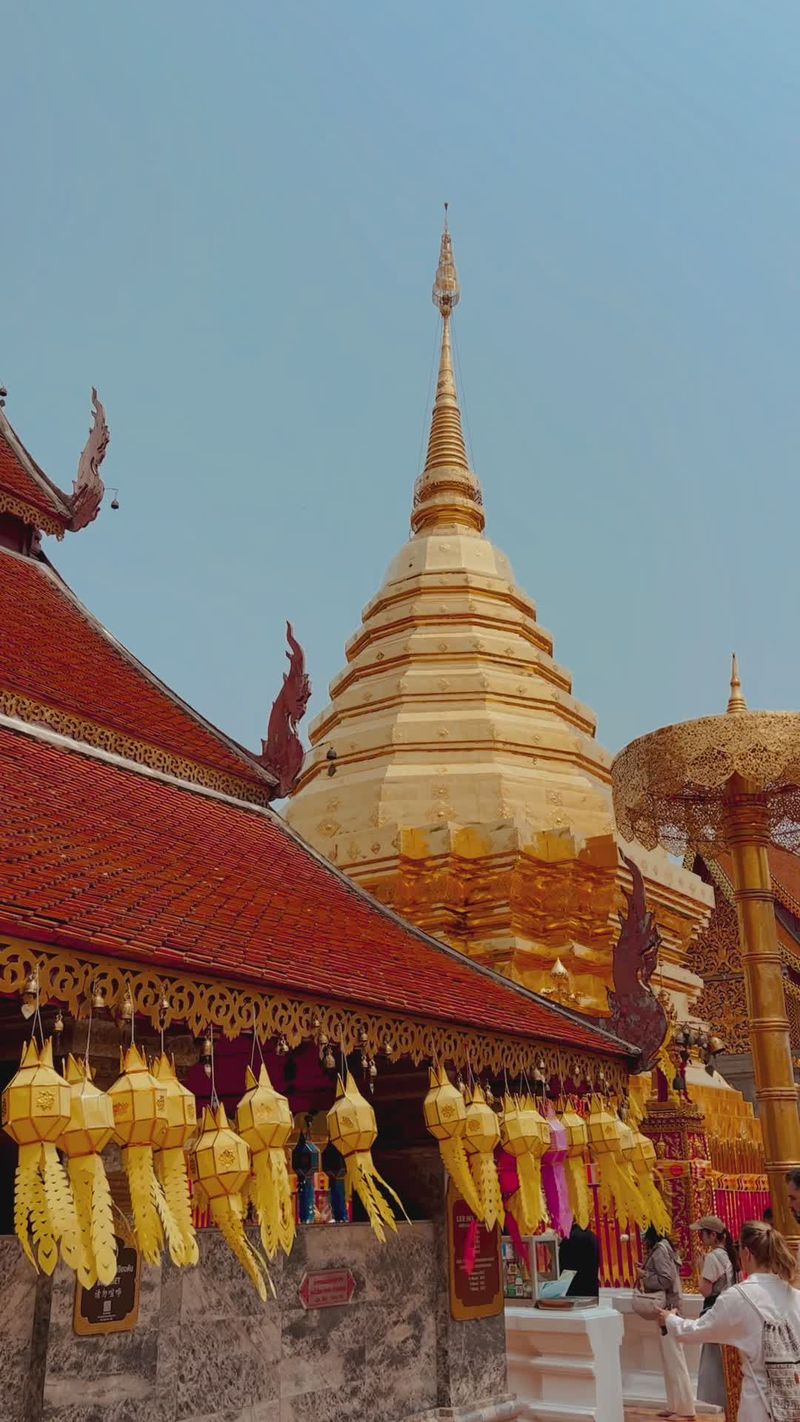
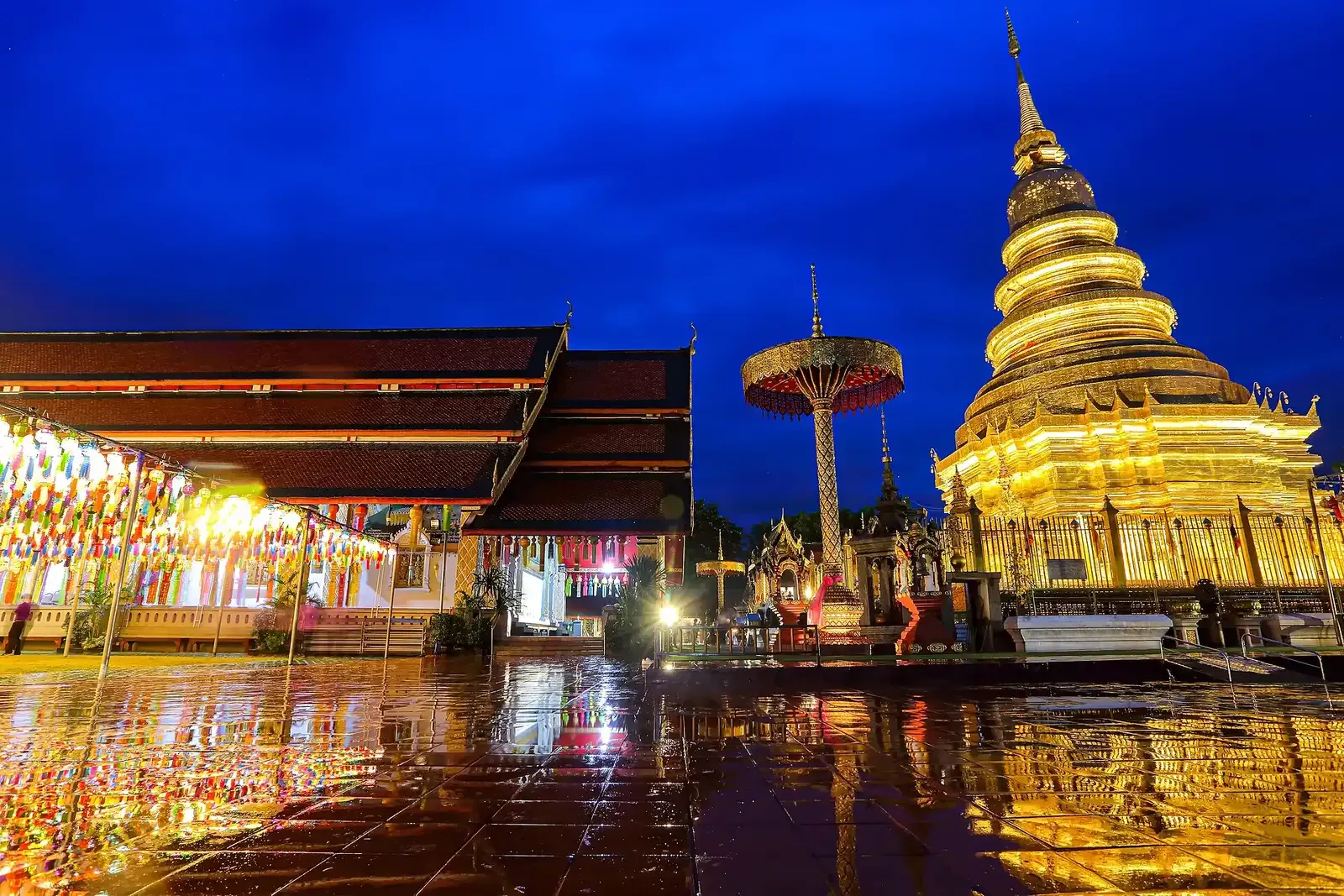
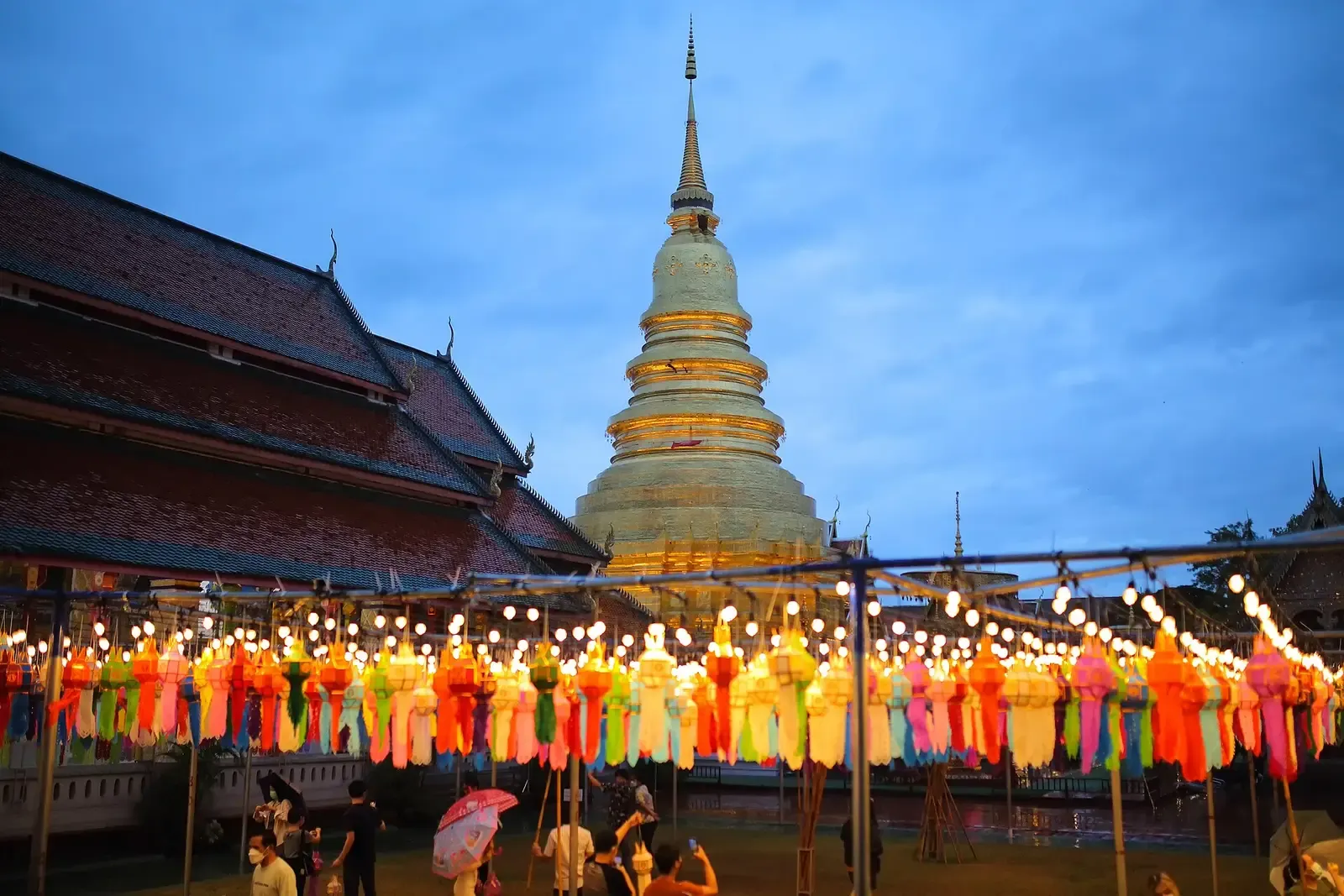
Every year, the courtyards of Wat Phra That Hariphunchai in Lamphun slowly fill with Lanna paper lanterns, hung one by one by people making merit. The festival is called Khom Saen Duang, “a hundred thousand lanterns”, and the 2026 edition began on 1 October and runs until 30 November.
Lamphun is a small, very old town about 26 km south of Chiang Mai, and the temple sits in the middle of it. The festival fits easily into an evening: arrive before sunset to see the golden chedi in daylight, stay while the lanterns light up, and be back in Chiang Mai for a late dinner.
The dates below come from the organisers’ announcements as reported in Thai media in September and October 2026. Opening hours during the festival aren’t published in one place, so check the temple’s official Facebook page before you go.
Lamphun lantern festival 2026: key dates
- 1 October: the first lanterns were hung at 08:00, with the governor of Lamphun and senior monks taking part. Lanterns have gone up every day since.
- 14 November: official opening ceremony.
- 22 November: the lantern procession to the Phra That Hariphunchai relic.
- 24 November: a Maha Chat sermon and a ceremony offering lanterns to the relic.
- 30 November: last day.
Programmes can change, so check again closer to the date if you’re planning around one of these.
What is the Hundred Thousand Lanterns festival?
In Lanna, the old kingdom of northern Thailand, hanging a lantern is a way of making merit: you offer its light to the Buddha. In Lamphun, the lanterns are offered to the Phra That Hariphunchai, the relic chedi at the heart of the temple, during the Yi Peng season. The festival also honours Queen Chamadevi, the first ruler of Hariphunchai, the kingdom Lamphun grew from.
The temple is the centre of it, but the festival has two other venues in town: the square at the Queen Chamadevi Monument and Wat Mahawan. The programme also includes Lanna folk performances and a food market, though the organisers haven’t published times for each.
“A hundred thousand” is the name of the festival, not a running count. By 15 October, the temple said more than 30,000 lanterns had been hung, with roughly twice as many going up from Friday to Sunday as on weekdays. It expects to reach the full hundred thousand this year, but hasn’t said when.
How to hang a lantern
Anyone can take part. You offer for a lantern at the temple (in Thai, bucha khom), write your name and a wish or prayer on it, and it’s hung with the others as an offering to the relic. Ask at the temple where to write it and where it goes.
Take a photo of your lantern before it’s hung. Once it’s on the line among thousands of others, it’s hard to find again.
When to go
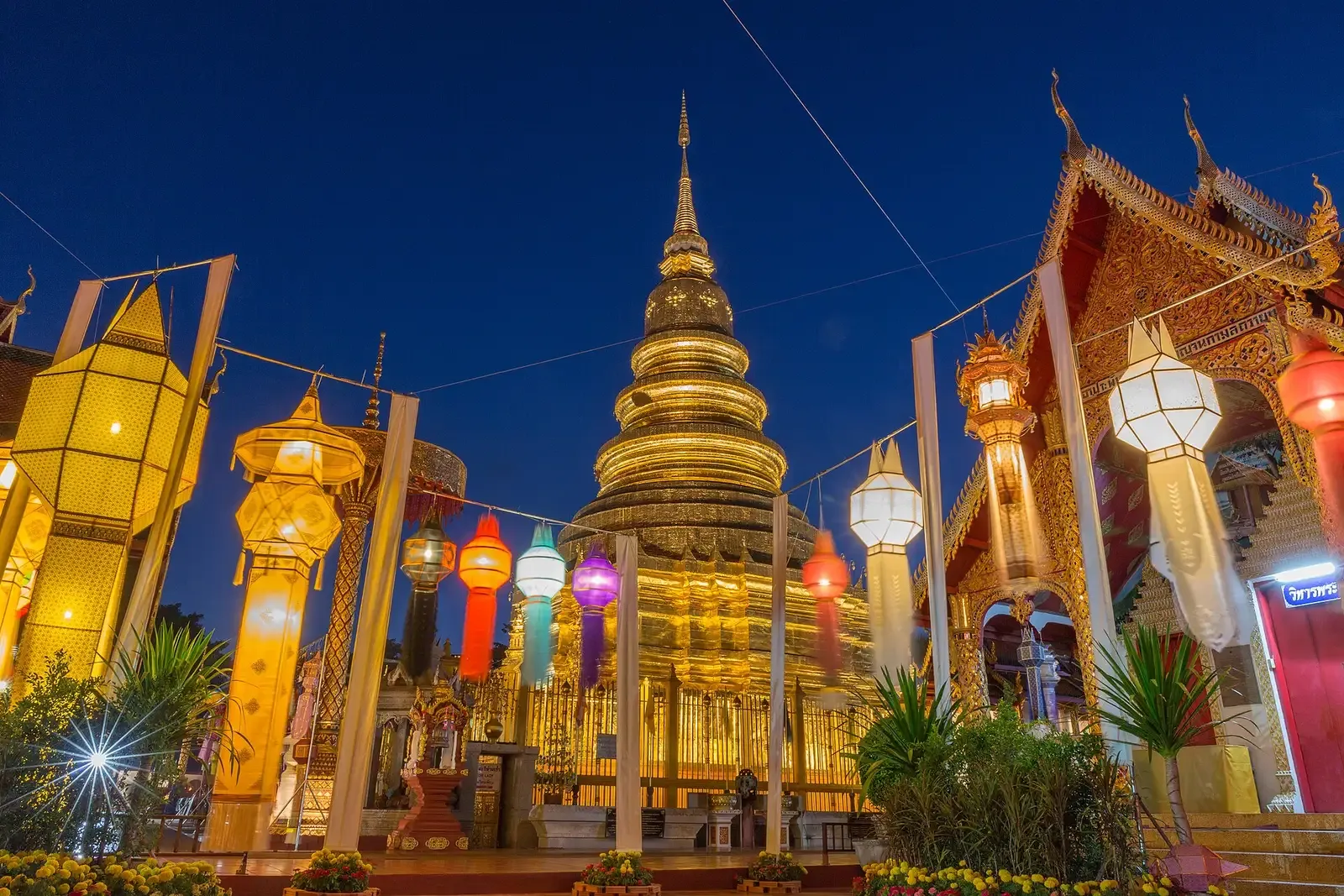
Time of day. After dark, when the lanterns are lit, is the reason to come. Getting there an hour before sunset gives you time to walk around the temple in daylight first. Third-party listings give the temple’s normal hours as early morning to about 18:00, and in past years it stayed open into the evening during the festival. Confirm the closing time before you set off.
Which night. Weekdays are calmer than weekends. Expect the biggest crowds around the opening ceremony on 14 November, the procession on 22 November and the ceremony on 24 November.
How late in the season. The display grows every day. The temple has suggested coming more than once, because new lanterns keep going up and spread to more parts of the grounds, so late November will look fuller than early October.
Weather. October is the tail end of the rainy season, so bring an umbrella. November is usually drier and cooler in the evening.
What to see at Wat Phra That Hariphunchai
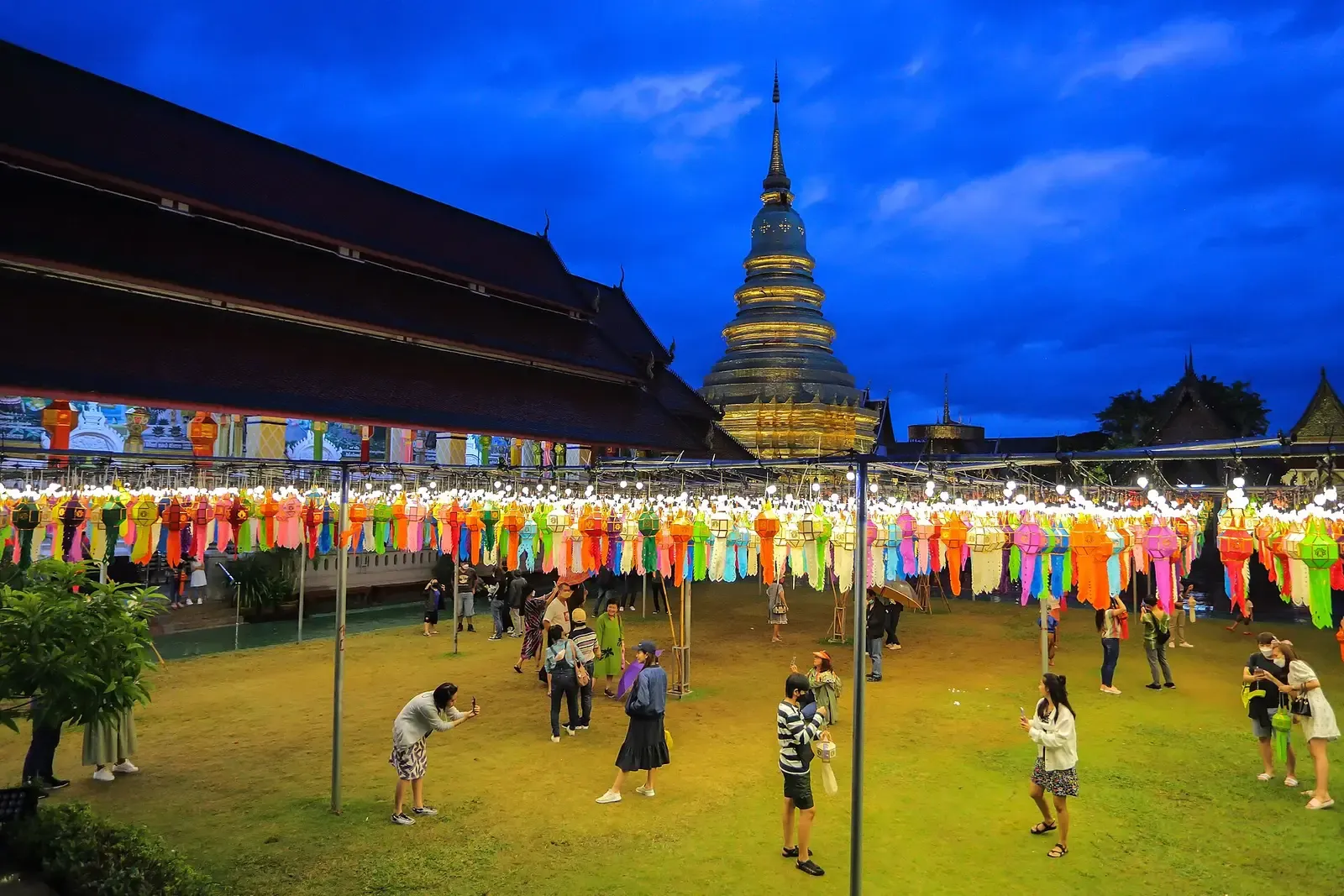
Wat Phra That Hariphunchai is one of the most important temples in northern Thailand and a first-class royal temple. Its origins go back more than a thousand years: the compound as it stands dates from the 11th century, under King Athitayarat of Hariphunchai, and Lanna kings rebuilt and enlarged it later.
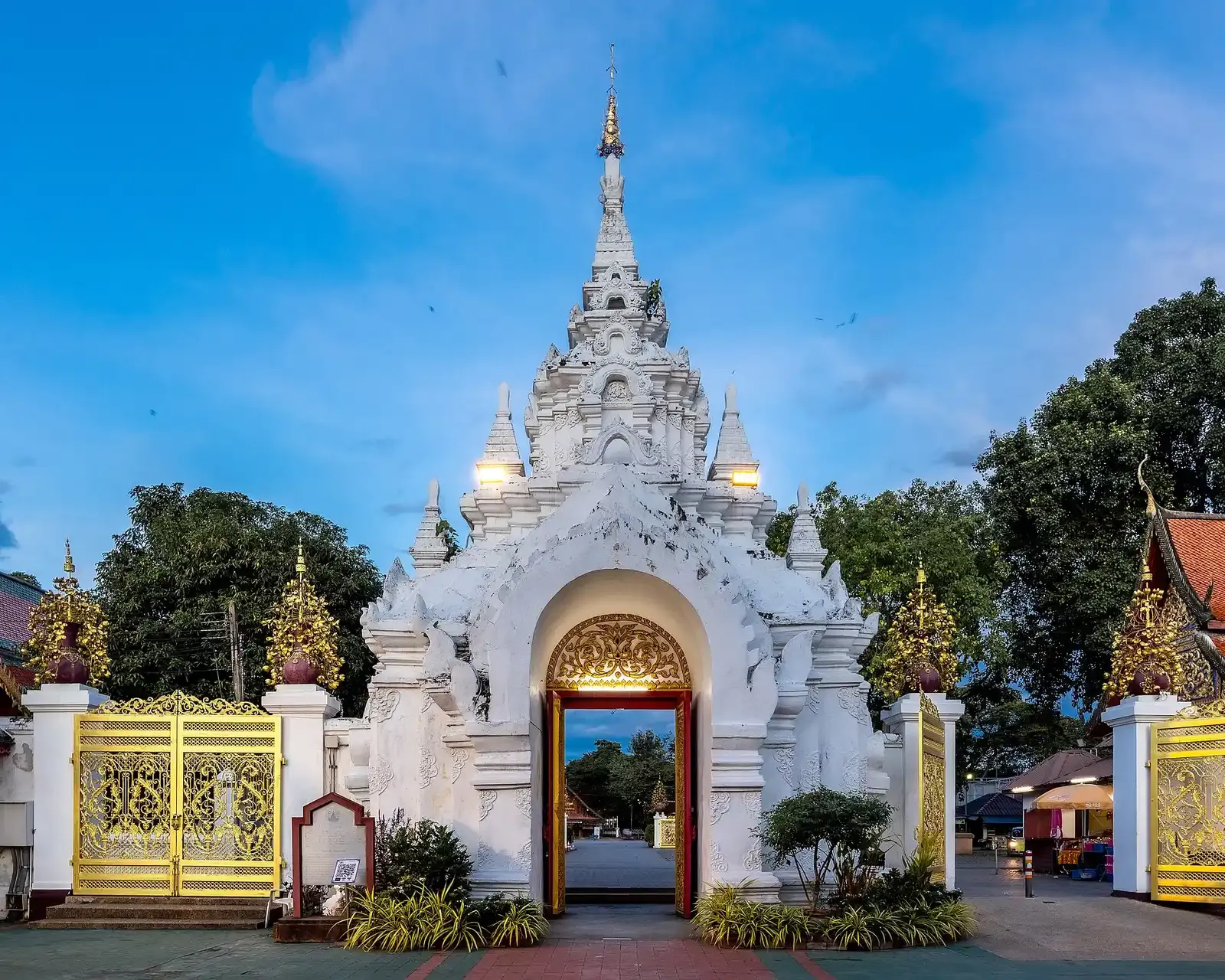
The entrance gate. The main way in is through a white gate guarded by two large red singha (lion) statues.
The golden chedi. The Phra That Hariphunchai, about 46 metres high and covered in gold, is said to enshrine a relic of the Buddha. In Lanna belief it’s the relic chedi for people born in the Year of the Rooster, as Doi Suthep is for the Year of the Goat. Worshippers walk around it clockwise with flowers and candles.
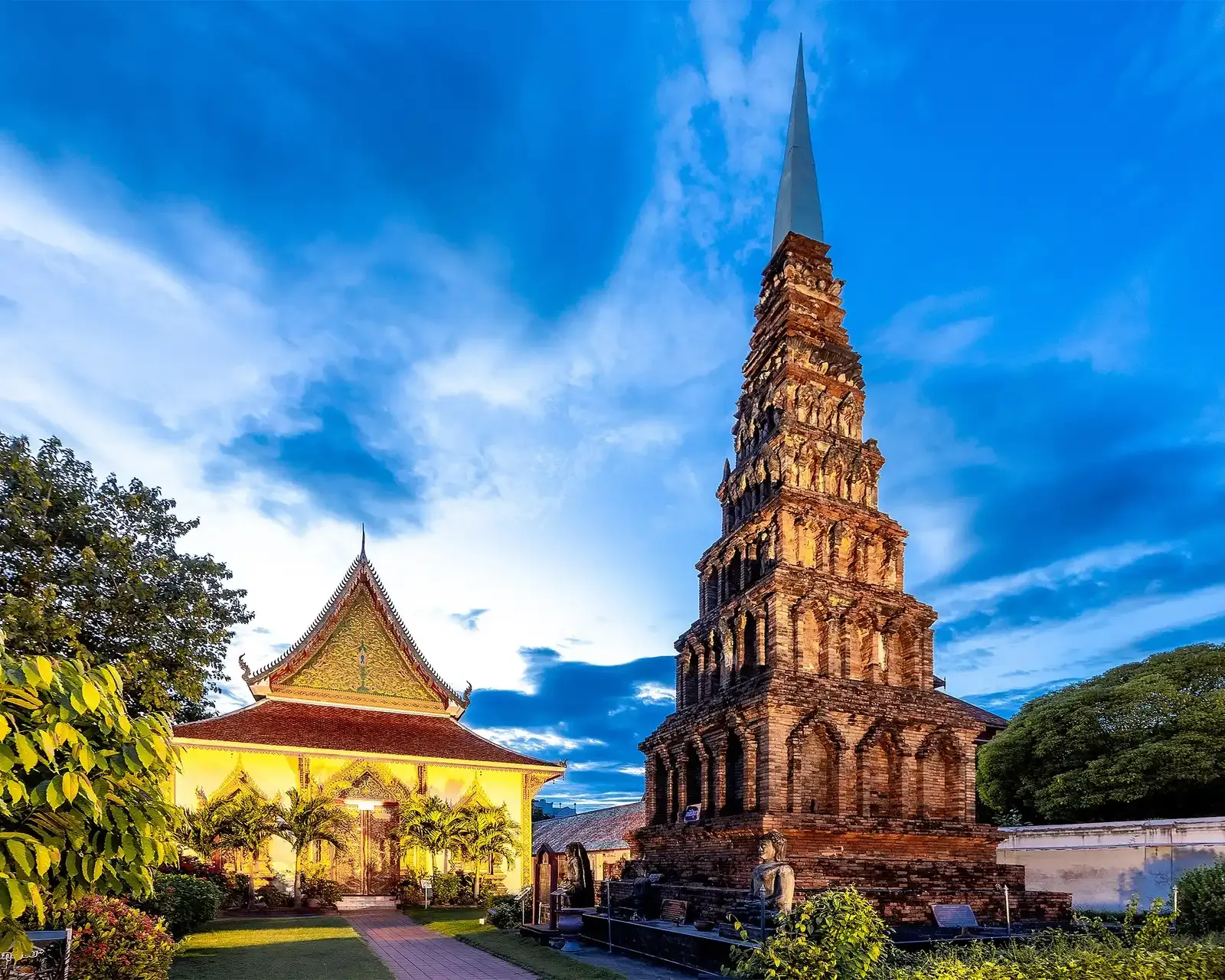
The Suwanna Chedi. In the northwest corner, a stepped brick pyramid from 1418 in the older Hariphunchai style, with standing Buddha images in its niches. It’s a striking contrast to the gold.
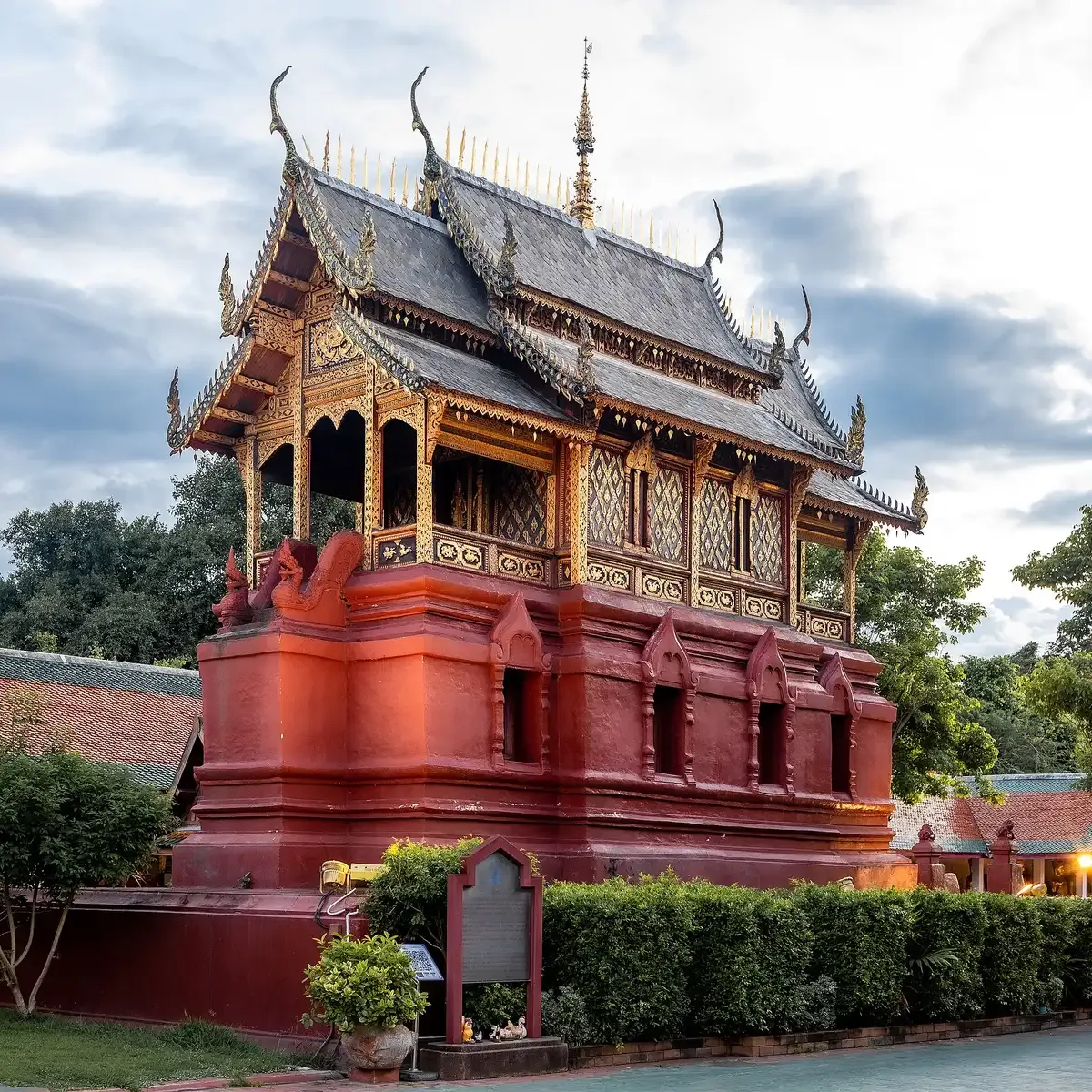
The scripture library (Ho Trai). A small, ornate wooden library raised on a tall red base, built to keep palm-leaf scriptures away from damp and insects.
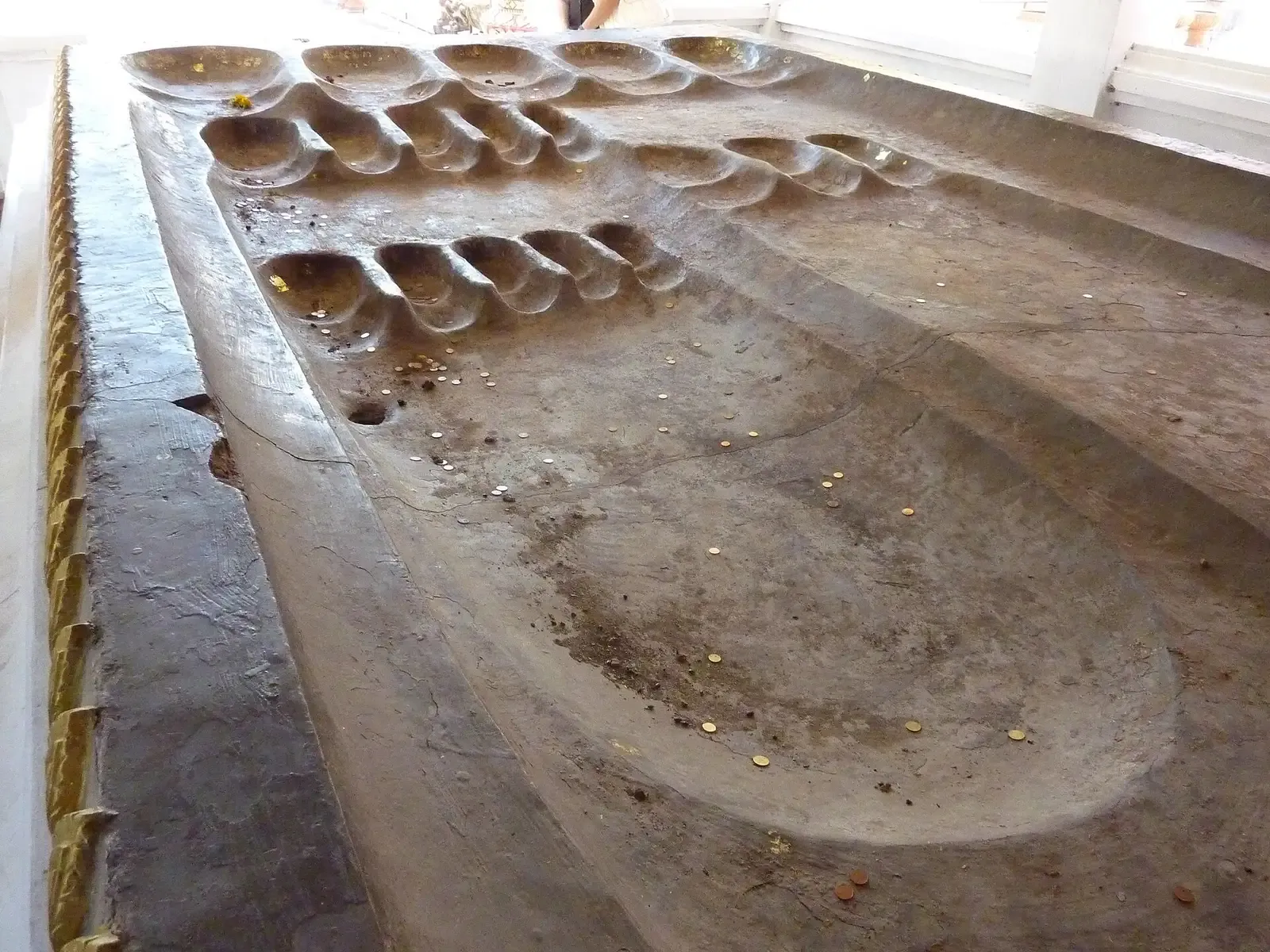
The gong and the Buddha footprints. A huge bronze gong cast in 1860 is said to be one of the largest in the world. In the southwest corner, a stone slab carries four overlapping footprints, which worshippers take as a sign that the Buddha visited the area.
Dress code and temple etiquette
This is a working temple, and the festival is a religious event.
- Cover shoulders and knees. This applies to men and women. Long trousers or a long skirt are safest.
- Shoes off before going into the temple halls.
- Walk clockwise around the chedi, and don’t climb on anything.
- Feet down. Don’t point your feet at Buddha images or monks.
- Women shouldn’t touch monks or hand things to them directly.
- Keep it calm. People around you are making merit, so don’t photograph people praying up close.
How to get to Lamphun from Chiang Mai (and back)
Lamphun is about 26 km south of Chiang Mai. The old road between them, Route 106, is lined with tall yang trees, many more than a hundred years old and now protected. The drive takes around 40 minutes, longer in evening traffic.
Shared blue songthaew. Blue shared trucks run between Chiang Mai and Lamphun. Older guides mention pick-ups near Warorot Market and across Nawarat Bridge, but stops change, so ask at your hotel. They stop often and take longer than a car, and you’ll be coming back after dark, so plan the return before you go.
Train. Lamphun station is on the Northern Line from Chiang Mai station, about 2 km from the temple. There are only a few trains a day, so check the timetable for a train back in the evening.
Grab or Bolt. An easy way there. Before you let the car go, check the app for cars in Lamphun, especially if you’ll stay late.
Your own scooter or car. Straightforward on flat roads. Parking near the temple fills up on festival nights, so arrive early or park further out and walk.
Car with driver. Hire a car with driver for the evening. The driver picks you up at your hotel, waits while you visit and drives you back, which saves worrying about the ride home after dark. Arrange it in advance.
More in Lamphun
Hariphunchai National Museum is across the road from the temple, with finds from the Hariphunchai period. Lamphun’s tourism listings give its hours as 09:00 to 16:00, Wednesday to Sunday, closed on public holidays, so it only fits a daytime visit.
Wat Chamathewi (also called Wat Kukut) is elsewhere in town, with stepped brick chedis like the Suwanna Chedi. The Suwanna Chedi is believed to be modelled on them.
FAQ
When is the Lamphun lantern festival in 2026? From 1 October to 30 November 2026. The official opening is on 14 November and the lantern procession is on 22 November.
Is it the same as Yi Peng in Chiang Mai? No, though both happen in the same season. Chiang Mai’s Yi Peng and Loy Krathong celebrations centre on the full-moon nights in late November, with floating krathong and sky lanterns. Lamphun’s festival is about hanging lanterns at one temple over two months.
Can visitors hang a lantern? Yes. Offer for a lantern at the temple, write your name and a wish on it, and it’s hung with the others.
What should I wear? Cover shoulders and knees, and take your shoes off before going inside the temple halls.
Questions before you go?
Questions about visiting the lantern festival? Message us on WhatsApp.
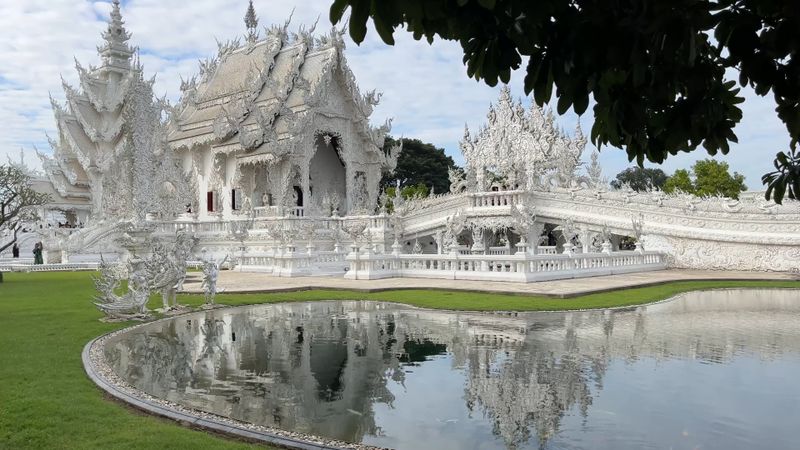
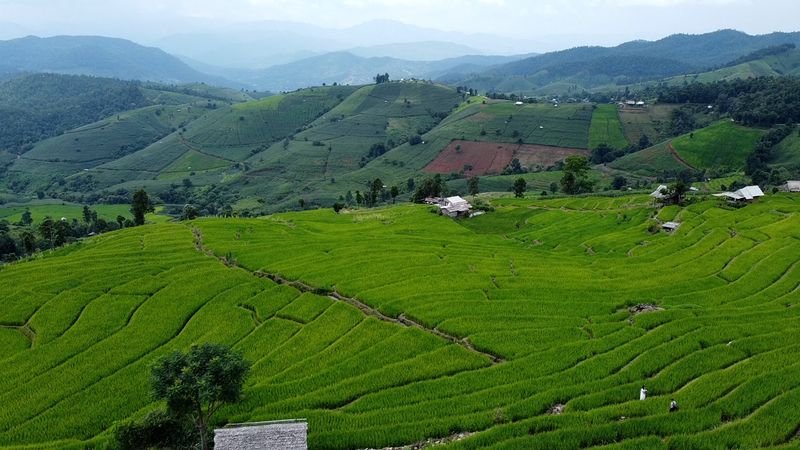
Photos, in order: Yakuzakorat, CC BY-SA 4.0 · Yakuzakorat, CC BY-SA 4.0 · Hong2101, CC BY-SA 4.0 · Yakuzakorat, CC BY-SA 4.0 · Supanut Arunoprayote, CC BY 4.0 · Supanut Arunoprayote, CC BY 4.0 · Supanut Arunoprayote, CC BY 4.0 · Photo Dharma from Sadao, Thailand, CC BY 2.0. Via Wikimedia Commons; resized and converted to WebP. The lantern photos were taken in October 2021 and November 2015, not during the 2026 festival. The video at the top is stock footage for illustration; where it was filmed isn’t stated, so don’t take it as Wat Phra That Hariphunchai.